+65-98533024





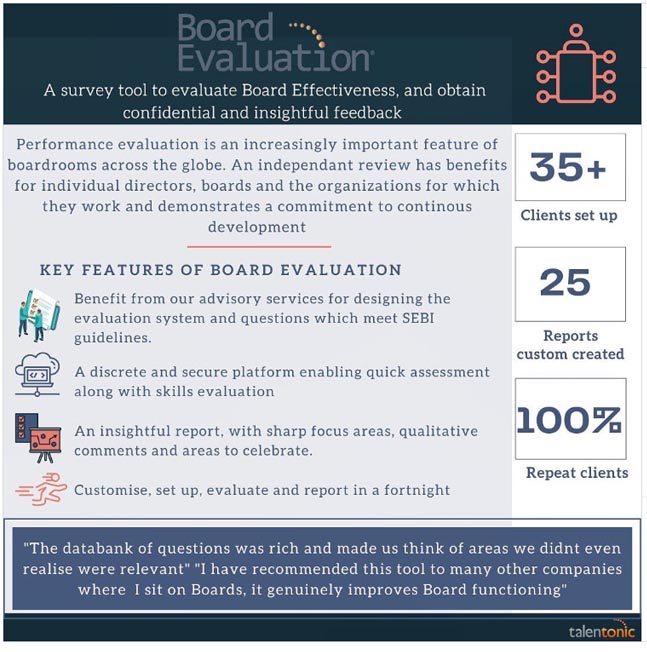
Over the last six years,Talentonic HR Solutions Private Limited has conducted more than 80 Board Evaluations across Indian Companies using our Board Evaluation methodology and product. One of the patterns we have observed is that the Indian Boardroom is gradually transforming. While governance and compliance remain important, the centre of gravity is slowly shifting towards helping navigate growth, succession, culture, risk, and strategic options in an uncertain world. As governance and compliance has matured, and the attention of the Board has shifted to forward looking, there are attendant changes in the functioning and structure of the Board.
1. Board Agenda: From Compliance to Contextual Strategy
Board agendas are increasingly reflecting the strategic challenges and risk profiles of the business , moving away from standardized, compliance-driven templates.
Some examples.
a) Company A: Growth strategy was driven by multiple capacity acquisitions. Over the years the major concern of the Board was cost arbitrage, legacy branding challenges, integration of people systems and targeting a broad based cultural and strategic integration.
b) Company B: Rapid unrelated diversification. New businesses reached a significant 30% of the total portfolio. The Board focused on portfolio management, capital allocation, assessing risks in new businesses, talent shortages, and board structure & agenda changes needed to deal with the diversity of these challenges.
c) Others: In a family-owned company, issues of succession and talent pipeline occupy the board ‘s attention. Boards exposed to geopolitical risks are spending more time calibrating growth strategies with external volatility.
Progressively Boards want to see speed, and technology in how the fiduciary role is performed. That role is still critical, but must be handled with effeciency saving time and opportunity for driving engagement, and facilitating a more strategic discussion on "things that are beginning to matter."
2. Board Composition and the Evolving Role of Independent Directors
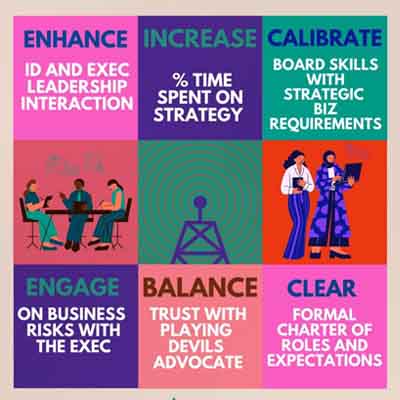
As the nature of Boardroom dialogue evolves, it places new demands on board composition and capability, fuelling a healthy debate on the role and accountability of the independent directors.
Independent directors are seeing their role through different lenses. More of them, who are career professionals look for meaningful participation and opportunity to make a difference. Some of them succumb to back seat driving to push for best practices and many others. express a legitimate concern for the expanding awareness of keyman risk and talent quality. Similarly on strategy, the canvas has become larger. Off-sites are welcome , but the expectation is increasing for earlier and more frequent conversations on capital decisions. Not just approvals. There are other directors who define their role more conservatively and resist the expansion of the agenda towards themes of strategy and talent. “We are overstepping our role. Let this come to the board. Our role is oversight ...not policy."
As a best practice, some companies now engage in succession planning for Board members and encourage an open discussion on the Board’s structure. More members prefer a trimmer board with a diverse talent pool consisting of business experience & financial acumen. Inducting “domain” into the Board is a losing debate. Some see this as a direct interference in the role of Management and would prefer to focus on developing diversity of experience as the basic Board management principle.
3. The Rising Prominence of the NRC (Nomination & Remuneration Committee)
One aspect of the Board’s structure which has lept into prominence is the NRC. Board members see an increasing risk is succession, talent, capability and culture. In so much of the Board evaluation work we do, 25-30% of the action plans, have focussed on talent and the role of the NRC. Keeping the NRC/ Board regularly informed through dashboards and meetings with HR. The conversation on succession has certainly matured and crept beyond the KMPs. Other areas getting attention are employee engagement & leadership development tied to pipeline creation. This spread of the NRC attention has a mutuality where Managements are also finding that this as a good area to collaborate and encourage conversations. Encouragement to the NRC to develop its oversight muscle.
4. Board Evaluation itself is the solution
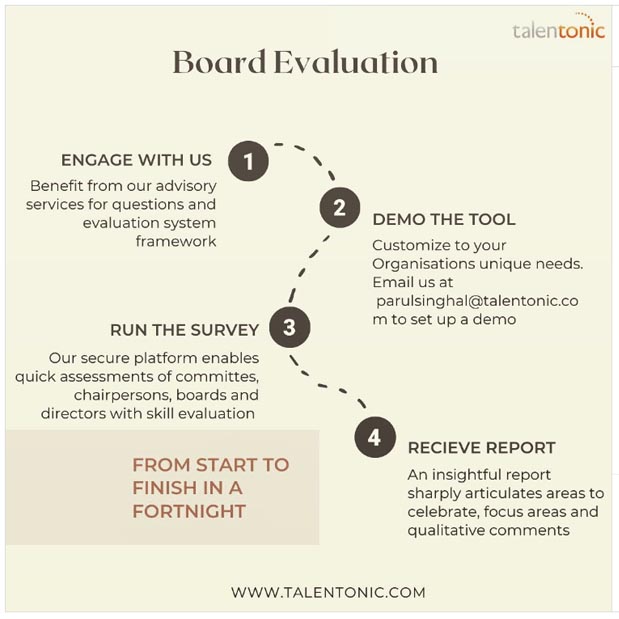
Board evaluation, and the process of conversations, reporting , and discussions in itself ends up creating improvements within the Board's functioning which has the following positive impact.
1. It creates momentum with action plans being finalised and progress being reported each year. Many clients have reported significant progress in director engagement on Board structure, talent & strategy.
2. The discussions in forward looking areas inevitably leads to a better understanding of the purpose of the Board. This understanding has an enduring impact on the partnership which is crucial to the Board's functioning.
5. Looking Ahead
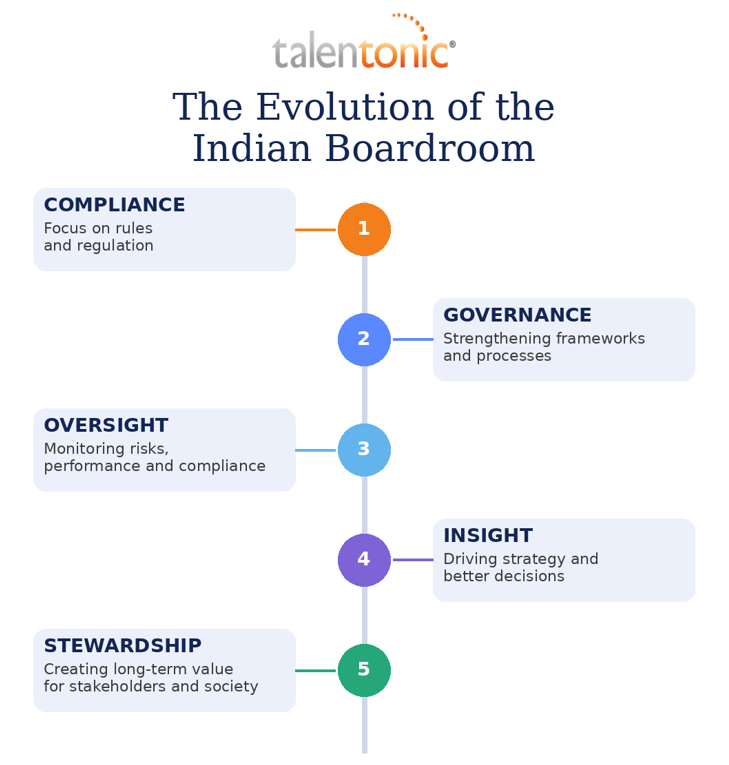
The Indian Boardroom is clearly in transition—from oversight to insight, from compliance to context, and from process to purpose.
At Talentonic HR Solutions Private Limited, we are privileged to witness and support these developments. We remain committed to enabling meaningful Boardroom conversations and sharing insights from the many ongoing experiments that we are witnessing inside the Boardroom.
We are delighted to join the Board Stewardship community and look forward to exchanging such insights with its membership.